
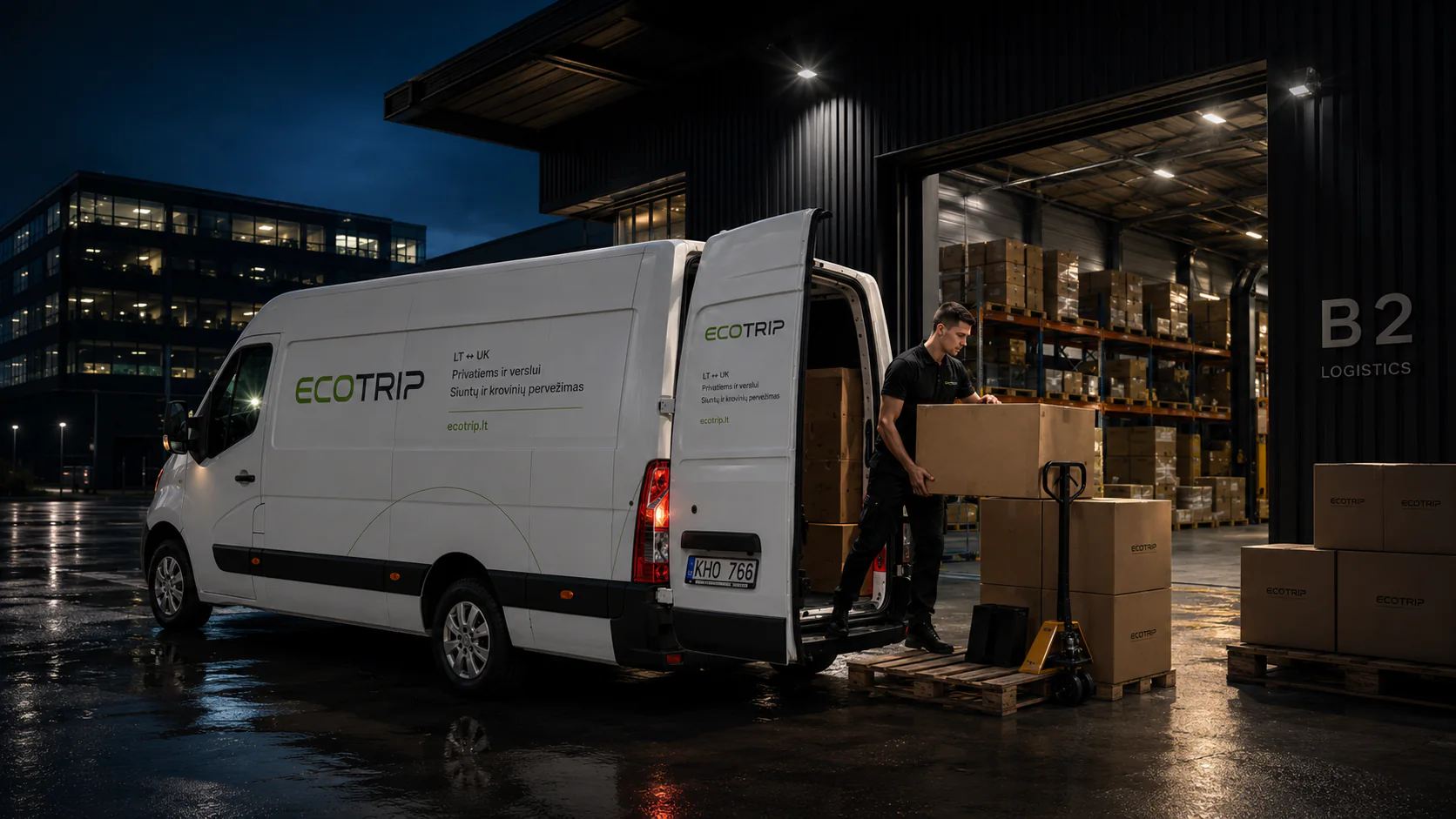

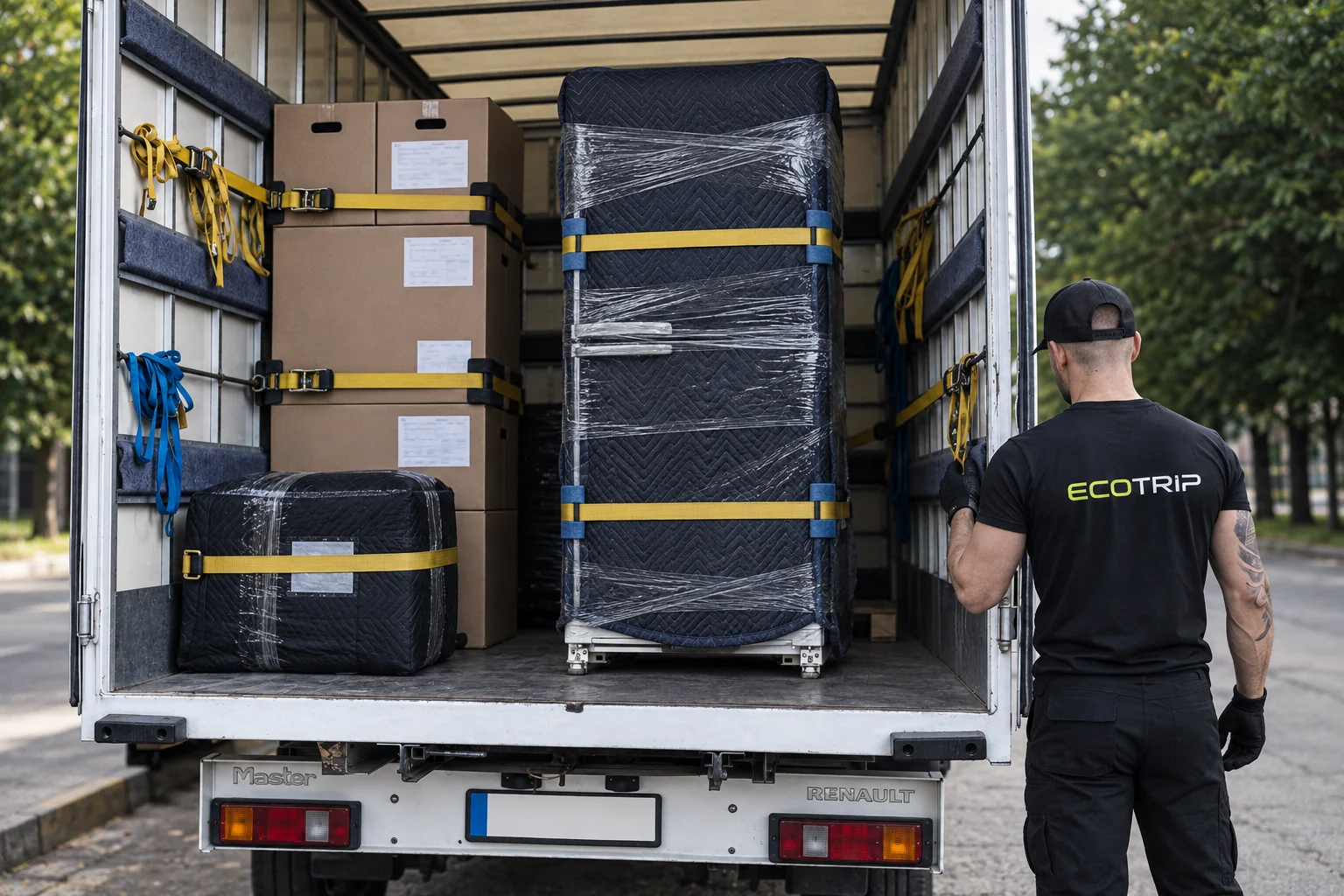
3.5 tonnes is the vehicle’s maximum authorised gross mass class, not its payload.
EcoTrip loads may be up to 4.2 m long, 2 m wide and 1.2 tonnes in weight, without exceeding the individual vehicle’s permitted payload. Height and loading arrangements are confirmed separately.
Vehicle size alone does not guarantee good transport. What matters is whether capacity and payload suit the load, whether the vehicle can reach both locations and whether it fits the loading conditions. EcoTrip uses 3.5-tonne-class goods vehicles, defining both the tasks where we can be flexible and the limits to assess beforehand.
When this class works best
A 3.5-tonne-class vehicle often suits parcels, furniture, appliances, part loads, small removals and regular delivery routes. It is useful when access to the recipient and multiple stops matter, without needing heavy-goods capacity.
The advantage is the fit, not the size
A smaller goods vehicle may be more practical in a city, residential area or restricted-access location. The real benefit comes from considering dimensions and weight and agreeing loading conditions, recipient-friendly timing and additional work. You avoid planning excess capacity or resolving surprises on arrival.
When another solution is needed
A 3.5-tonne-class vehicle may be insufficient for very heavy loads, many pallets, temperature control, lifting equipment or other special requirements. Tell us about these before a quotation is prepared.
What to provide for an initial assessment
- Freight photos, dimensions and approximate weight.
- Loading and delivery addresses.
- Floor, lift, gate and vehicle access details.
- Preferred date or regular schedule.
- Loading, carrying upstairs or assembly work required.
We assess the task first
You do not need to decide which vehicle to request. Describe the load and desired outcome accurately. Our job is to say whether our transport is suitable, which team is needed and how collection and delivery will work.